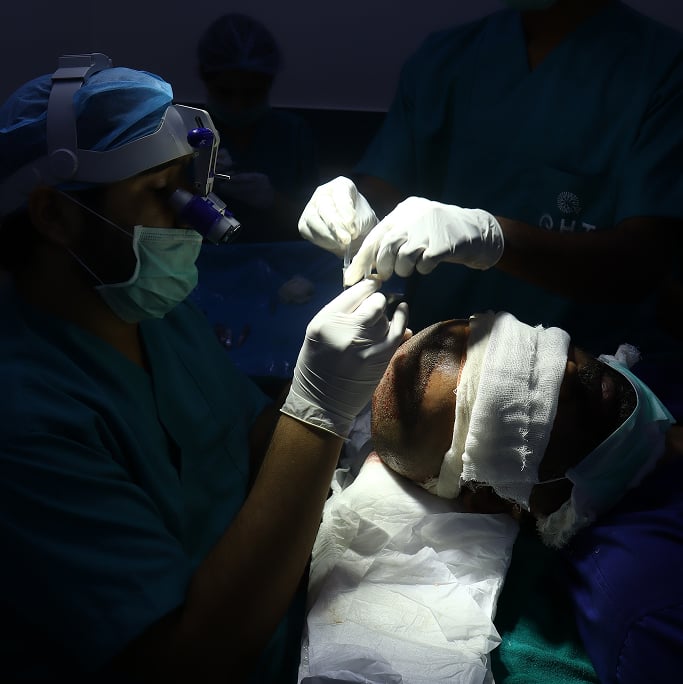
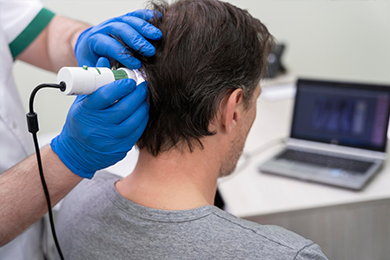
Jaipur is not short of hair clinics. It is short of surgeons who do this all day. Walk through C-Scheme or Vaishali Nagar and you pass places that will quote a per-graft rate before anyone has looked at your head. A transplant is not a facial you can redo next month. The follicles you move are moved for good, and a hairline drawn badly is a hairline you wear for twenty years. So the first job is not finding the cheapest graft. It is learning to tell a surgical theatre apart from a salon with a surgery sideline.
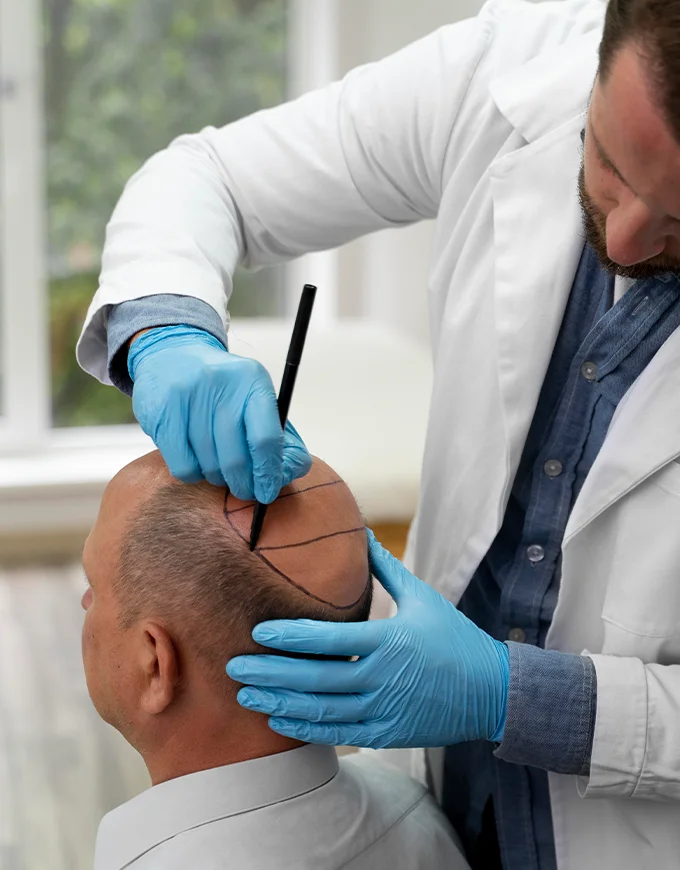
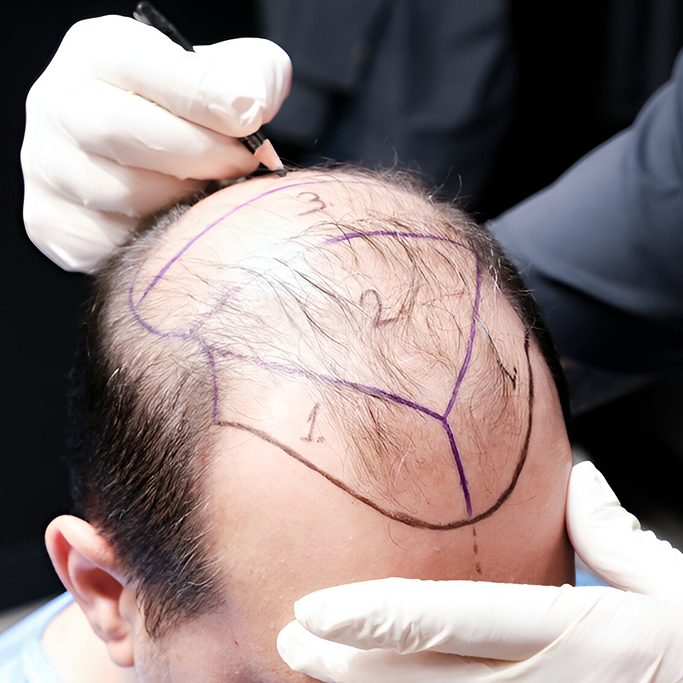
A trained surgeon should map your hairline and place your grafts. If the consultation is with a counsellor and the surgery name stays vague, walk.
Ask for FUE and QHT, not only the old strip method. The right choice depends on your Norwood grade and how much donor hair sits at the back and sides.
A soft number on the phone and a hard one after the scalp check is the classic bait. Your graft count, technique and total should be fixed on paper before surgery day.
A proper clinic gives you a medication list and dated reviews. Healing should never run on memory.
From Jaipur, a wasted trip is not an afternoon. It is a flight or a long drive, a night in a strange city, and a day off work, all spent to hear something a photo could have told you. The online consult closes that gap. You send clear images of your scalp, a QHT surgeon grades your loss and reads your donor supply, and you get a plan with a graft count and a cost attached. Nobody asks you to travel on a maybe. You arrive in NCR for surgery, not for a sales meeting.
Baldness does not pause while you weigh quotes. The gap widens, the donor bank shrinks, and the clean job at 28 becomes the hard job at 35.
When the smooth talker books you and a nameless hand does the cutting, the surgeon you were promised may never arrive. Patchy growth and redo surgeries trace back to exactly this.
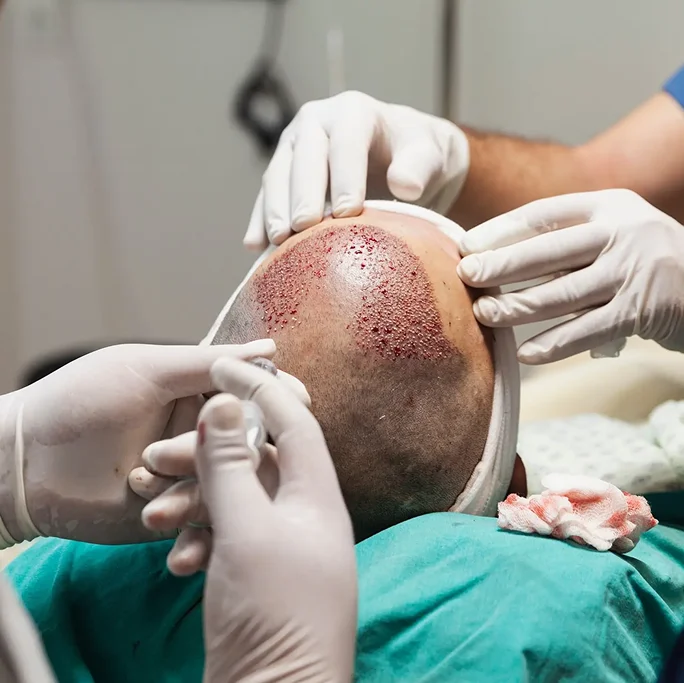
The operation lasts a day. The healing runs months. Skip the scalp-care steps and you can lose grafts that had already taken.
You can copy another man's graft count, his technique and his clinic, and still not copy his result. The surgery you see on the day is only the visible part. Most of what decides the outcome is locked in before the first follicle is touched.
This is why we refuse to name your graft count off a photo. The number is set once a surgeon has read your actual scalp, because that is the only number your donor area can honour.
Lifted follicles start to fade the moment they are out of the scalp. QHT holds that out-of-body time under two hours so fewer are lost.
The hair at the back and sides shrugs off DHT, the hormone behind pattern baldness, so it keeps growing after the move. Denser donor hair also spreads further without leaving the back patchy.
Your grade sets the size of the task. A large bald zone leans hard on a donor supply that cannot be topped up.
FUE, FUT and QHT each answer a different grade and donor picture. One menu does not fit one head.
The same judgement that shapes a natural hairline is the judgement that keeps grafts alive in transit.
A transplant redistributes hair. It does not manufacture it. Everything the surgery can give you is already on your head, waiting at the back and sides, which is why the consult starts with your donor area rather than your bald spot.
You are likely a good fit if you:
Male-pattern loss across Norwood 2 to 7 is the usual ground for surgery. Women tend to thin all over rather than go bald in a patch, so their assessment and technique take a different route.
Sometimes the right answer is to put the scalpel down. If your loss is still galloping, or it is early enough that nothing has truly set, a surgeon may start you on finasteride or minoxidil to steady the ground before anyone operates. Build a transplant on hair that is still falling and you spend your donor reserve chasing a moving target. Plenty of Jaipur patients finish the call with a prescription and no surgery booked. We count that as the consult doing its job.
Surgeons grade male-pattern baldness on the Norwood scale, from 1 for a full head to 7 for the heaviest loss. Where you land gives the first rough read on how many grafts the work will need.
| Norwood Grade | Typical Grafts Needed |
| 2 | 800–1,200 |
| 3 | 1,200–1,800 |
| 4 | 1,800–2,500 |
| 5 | 2,500–3,200 |
| 6 | 3,200–4,000 |
| 7 | 4,000–5,000+ |
Note: Treat these as opening figures. Your donor density and how much ground you want covered push the final count up or down, which is why it is locked after the scalp assessment and not before.

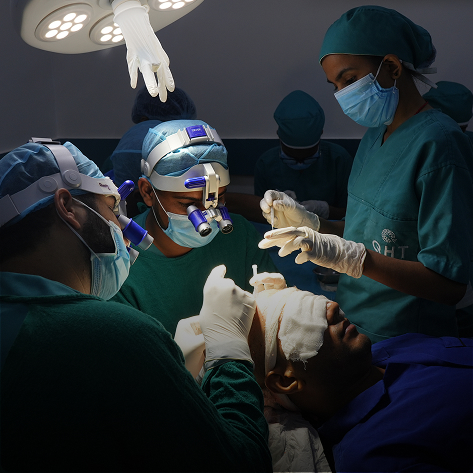
Your surgery is not one person’s shift. It runs across four stages, each handled by someone trained for it, and if you are in Jaipur the first stage is done before you have packed.
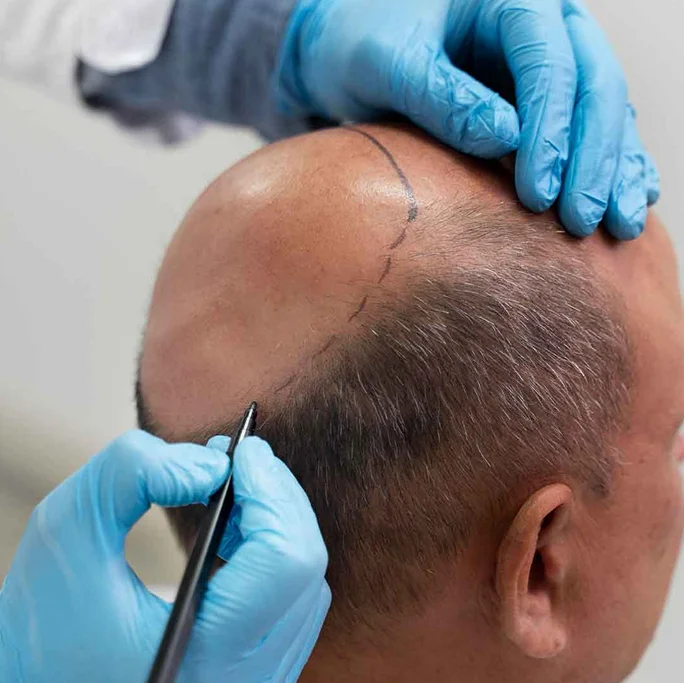
The hairline is yours to approve before a single graft moves. Nothing about your face gets decided above your head.
The cutting is over in a day. The growing takes the better part of a year, and it does not run in a straight line. Knowing the shape of it is what keeps you calm when the mirror turns discouraging.
| Phase | What Happens |
| Day 1–2 | Mild swelling and redness. Sleep propped up. Painkillers prescribed, no washing yet. |
| Day 3–7 | First wash under clinic guidance. Scabs begin to lift. Most people manage desk work. |
| Weeks 2–4 | The transplanted hair sheds. This is the plan working, not failing. |
| Months 3–6 | New hair starts breaking through. |
| Months 9–12 | Density fills in and the hairline settles into place. |
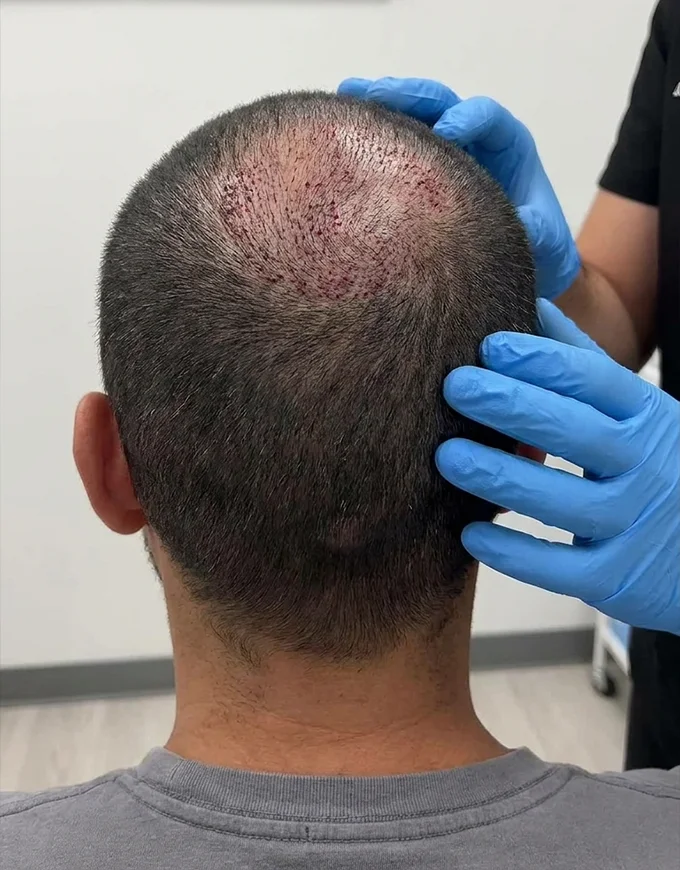
Around month three the shed leaves the scalp looking bare, and that is when the late-night searches start. The grafts are fine. Only the first hair dropped; the follicle held, and the hair that follows is the hair that stays. Jaipur’s dry heat and dust add one extra rule: keep the healing scalp shaded and loosely covered when you step out, and off the afternoon sun entirely for the first few weeks.
Because Jaipur patients head home within days, the first wash and the early checks are walked through by video, so a flight’s worth of distance never becomes a hole in your care.
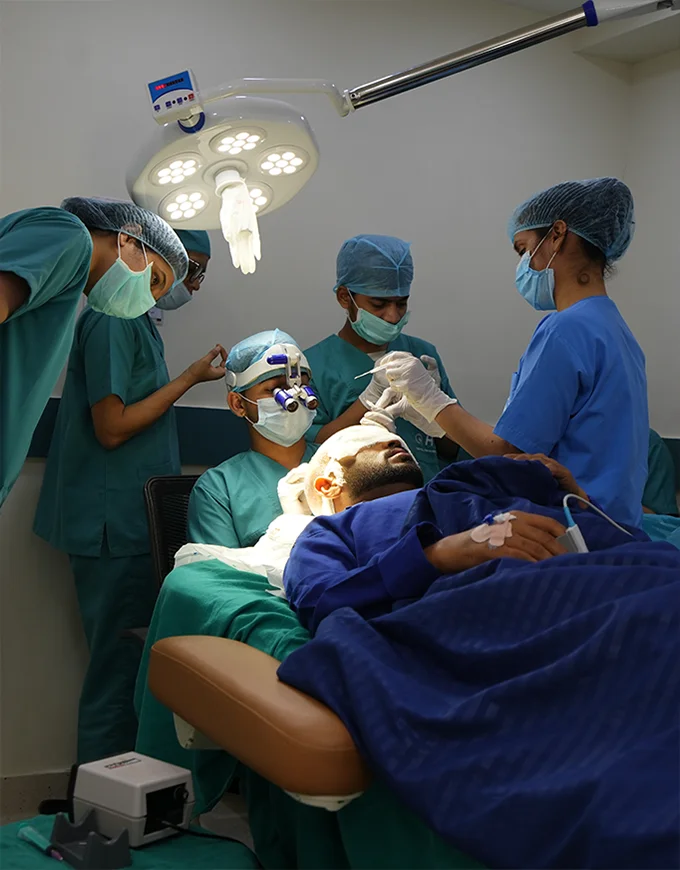
The wrong technique can flatten the results of a flawless surgery. Which one fits comes down to your grade and your donor area, settled after the scalp check rather than picked off a price list.
FUE takes follicles out one by one with a fine micro-punch. No strip, no long scar, and the donor area closes over within a week. It suits early to moderate loss, around Norwood 2 to 5, and wears well with short styles. The one condition is that the donor zone is shaved before work begins.
FUT is the older strip method, and it is still the lowest cost per graft. A narrow strip of scalp is removed from the back and divided into grafts under magnification. It delivers the most grafts in a single sitting, which earns its place in advanced cases at Norwood 5 to 7. The cost is a thin line at the back, easiest to cover with slightly longer hair.
QHT is the clinic’s own tightened version of FUE, and timing is the whole story. Each graft is placed back into the bald area soon after it comes out, keeping out-of-body time under two hours. Shorter time outside the scalp means more follicles survive, so the result tends to read as denser down the line. It is the pick for heavier grades and for anyone chasing thicker coverage with a hairline built to their face.
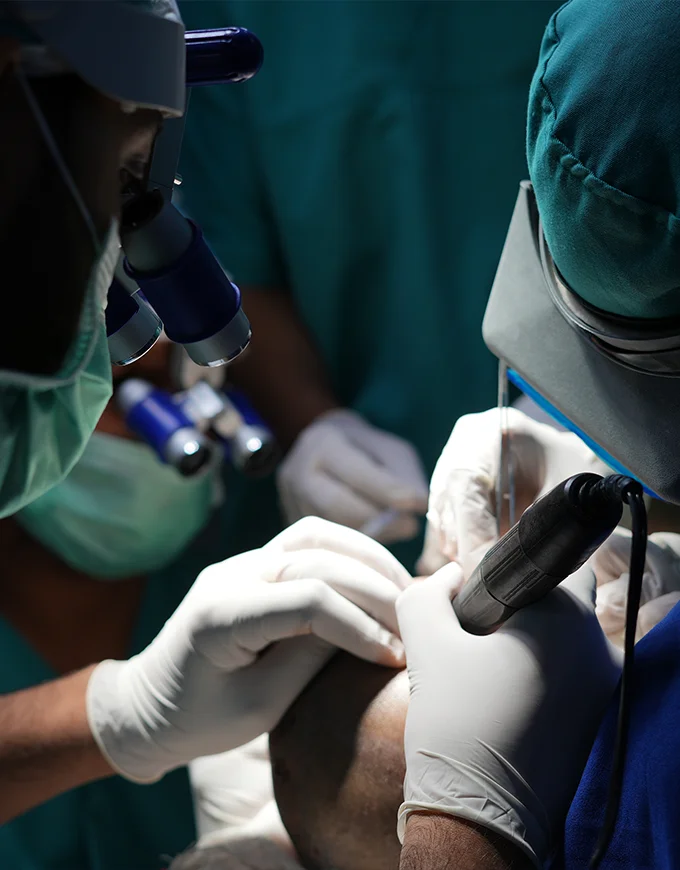
Search "hair transplant near me" in Jaipur and you meet two kinds of result: cosmetic clinics that squeeze transplants between other work, and Delhi operators dressed up in a Jaipur label. QHT is a third thing. The Delhi-NCR centre is a purpose-built surgical theatre a short flight away, and it treats patients who travel in from Jaipur, Ajmer, Jodhpur, Udaipur, Kota and Alwar.
What stands behind it:
The figures carry their weight: 15,000+ transplants across India and a 4.8 rating from over 3,000 verified reviews. The before-and-after gallery says more than this paragraph can, though your own result will always track your grade and your donor supply.
Travelling once to a theatre that owns your case beats staying local for a desk that quietly ships it to a stranger.
QHT Clinic commits to each and every case with 5 core principles that include personalised care, safe and sterile procedures, advanced techniques and tools for superior graft survival, long-term results, and transparent pricing.
The clinic is equipped with advanced tools and dedicated operating theatres to ensure patient safety.
Treatment plans are curated by expert surgeons based on your hair loss stage, expectations and medical history.
You pay the quoted price. Full cost breakdown before you commit to the treatment.
Specialised techniques with advanced graft handling protocols to reduce follicular damage and yield maximum results with harvested grafts.
12 months post-surgical support without any additional cost.
We also provide beard transplants, eyebrow restoration, and PRP therapy as other supporting services to Hair transplants in Jaipur.
Reach out anytime or visit us directly for personalized assistance, expert guidance, and seamless support experience.
Qht Clinic, Chandra Rekha Tower, Chandra Rekha Lane Next to HP Jagat Petrol Pump, Delhi-Haridwar Highway, Jwalapur, Haridwar, Uttarakhand - 249407
D -15, Outer Ring Rd, above Federal Bank, Prashant Vihar, Sector 14, Rohini, New Delhi, Delhi, 110085
Plot No. 3, Sector 46, Opposite Huda Market, Gurugram, Haryana – 122022
Here are the most asked questions about Hair Transplant in Jaipur and their detailed answers.
Not in the city. The nearest QHT surgical centre is in Delhi-NCR, a short flight or a five to six hour drive away, and every case opens with a free online consultation so the trip only happens once the plan is set.
Yes, and it is where Jaipur patients start. You send photos, a surgeon grades your loss and checks your donor area, and you leave the call with a realistic plan, a graft count and a cost, all before booking travel.
That is the first thing the consult settles. If the loss is early or still moving, the surgeon may put you on medication to steady it instead of operating. A stable scalp is the right base for surgery, so waiting is sometimes the smarter call.
The transplanted hair is. It comes from the back and sides, where follicles resist DHT, so it keeps growing in its new home. Untransplanted hair can still thin with age, which is one more reason to plan early.
It turns on your Norwood grade and the density you are after. Early thinning might need 800 to 1,500, while advanced loss can run beyond 4,000. The firm number comes after the scalp check, never over the phone.
No. Local anaesthesia fully numbs the scalp before anything begins, so you feel neither the extraction nor the placement. A day or two of mild soreness afterward is normal and eases with the prescribed medicine.
The grafts do their critical settling in NCR over the first few days, so the climate back home is not a threat if you follow the rules. Keep the scalp loosely covered and out of direct afternoon sun for the first few weeks, and stay on top of your water in the dry months.
Most people are back at desk work in 7 to 10 days. The surgery is one trip to Delhi-NCR; the follow-ups at Day 1, Week 1 and months 1, 3, 6 and 12 run mostly on video for Jaipur patients.
They do when an experienced surgeon designs and places the grafts. The hairline is drawn by hand to suit your face, and every graft follows the natural angle of your hair, so new growth blends into what is already there.
Yes. Female hair loss usually shows as all-over thinning rather than a bald patch, so the plan differs from a man’s. QHT treats women with FUE and QHT methods, often alongside medical therapy, with a scalp check deciding whether surgery is the right move.
Speed. QHT is a sharpened form of FUE, not a separate operation. Each graft goes back soon after it is lifted, keeping out-of-body time under two hours, which protects more follicles and tends to leave denser coverage over time.